Need flooded basement cleanup in Oklahoma City?
Request an estimate through the form, or Request a callback to check provider availability in Oklahoma City. Tell us what happened and a local provider can follow up with next steps.
No obligation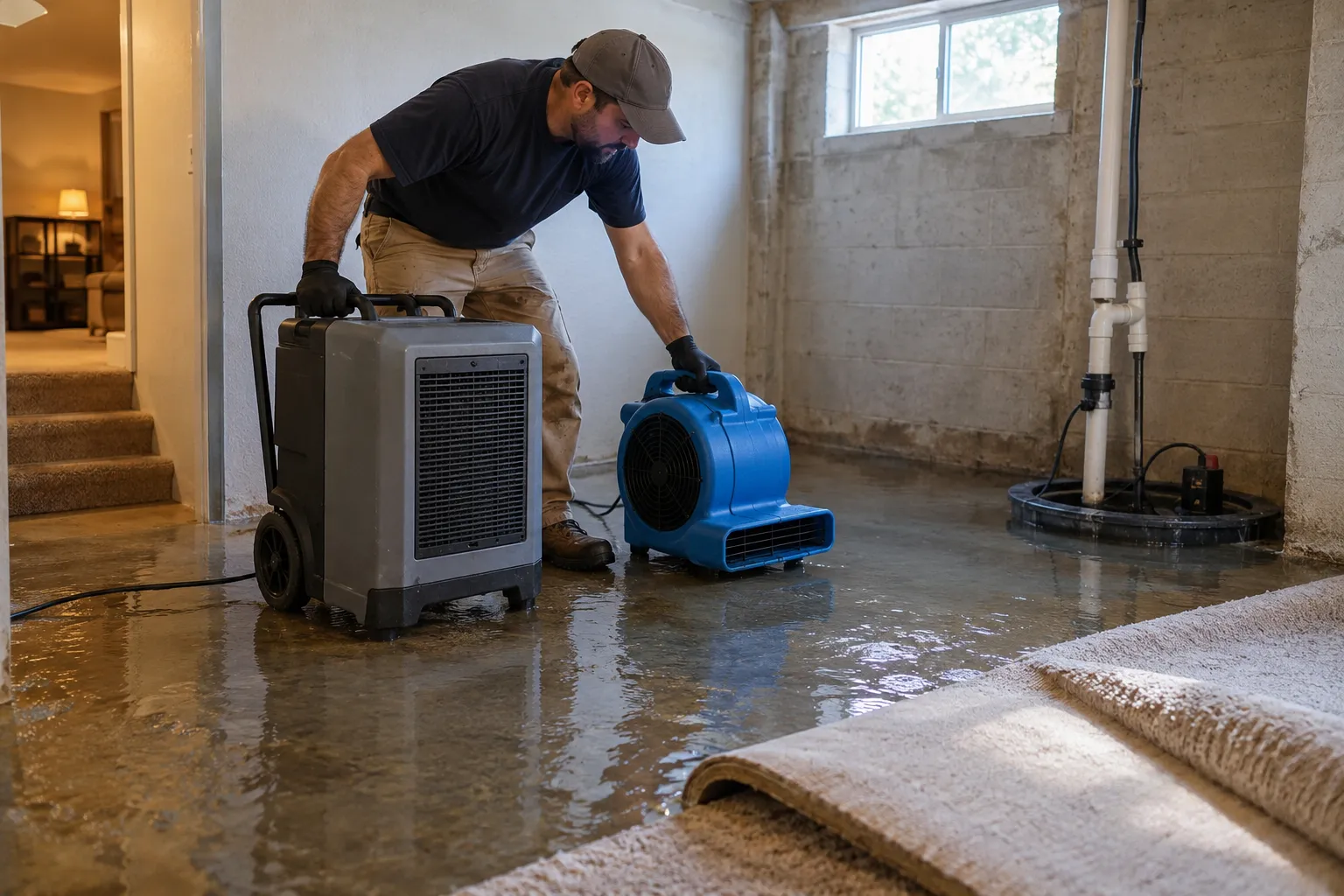
Request a written estimate
A lot of people think a flooded basement is just a pump-and-mop job. In practice, the water soaks into concrete, wood framing, drywall and insulation, and it keeps causing harm after the puddles are gone. Cleanup usually means removing the water, taking out what cannot be saved, drying the structure, and cleaning the space.
Englandpanel Restoration is a referral service for homeowners in the Oklahoma City metro area. We do not do the work. We connect you with independent local providers in our network, explain what drives the price, and encourage you to get a quote in writing. Providers do the work, and you decide who to hire.
Myth: "If I can see the water, I can see the danger." Fact: the worst risks are the ones you cannot see. Water in a basement can reach outlets, cords, a furnace or a breaker panel.
If you cannot tell whether it is safe, wait outside and ask a licensed electrician or a provider to take a look.
Myth: "Rain water is clean, so it is harmless." Fact: once it crosses soil and a concrete floor, it picks up dirt, bacteria and chemicals. Where it came from tells a provider how to handle it.
Severe spring storms, heavy rain and fast thaws after a cold winter can push water through window wells, cracks and foundation seams. Clogged gutters and soil that slopes toward the house make it worse.
A sump pump that quits during a storm is a common culprit. So is a burst supply line or a failed water heater. These are often cleaner water sources, but they still soak materials.
If the water came up through a floor drain or smells foul, treat it as contaminated. Do not clean it up yourself. Contaminated water needs extra protection and different disposal.
Myth: "It will dry out on its own." Fact: basements hold moisture. Concrete, framing and drywall stay damp long after the surface looks dry. Mold can start within a couple of days in a warm, damp space.
Many providers can respond quickly, and the sooner they start, the less material usually has to come out. Request a callback to check provider availability.
The exact steps depend on the job. Most providers follow a similar path.
Pumps and extractors pull out standing water first. This is the fastest way to lower the damage.
Soaked carpet, padding, insulation and drywall often need to go. Wet porous items hold moisture and can feed mold.
Air movers and dehumidifiers pull moisture from walls, framing and the slab. Providers often use moisture meters to check progress instead of guessing.
Hard surfaces get cleaned and treated. Sewer or storm water calls for stronger steps than a clean pipe leak.
Myth: "An unfinished basement is no big deal." Fact: it is easier to dry, but it still needs attention. Bare concrete and open framing dry faster, yet stored items and wood supports can still hold moisture.
A finished basement has more to lose. Flooring, drywall, trim and insulation hide wet spots behind them. Providers may cut small openings to check inside the walls. Expect more removal and more drying time. Ranch homes with full basements and storm cellars often have both kinds of space, so ask the provider to assess each area.
Myth: "There is one standard price for a flooded basement." Fact: price moves with the details.
A quote in writing should list these items clearly. If a number feels vague, ask what it covers.
Some policies may cover sudden damage, such as a burst pipe or a failed sump pump. Rising groundwater and sewer backup are often treated differently, so check your policy. Providers can often help document damage for a claim. Take photos before anything is moved.
Move valuables to a dry, high spot if it is safe. Photograph items before you toss them. Paper, photos and electronics need quick attention, and some can be dried or cleaned. Porous items like cardboard boxes and soft furniture are often hard to save.
The job is not done when the equipment leaves. Ask for the final moisture readings in writing. Then deal with the cause so it does not happen again.
Englandpanel Restoration is not a contractor. Providers do the work. We connect you with an independent provider in our network and you agree on the job and price with them directly.
Pumps and extractors clear the floor first, so less water soaks into the structure.
Soaked carpet, padding and drywall that cannot dry safely are taken out by the provider.
Air movers and dehumidifiers dry walls, framing and slab, with moisture readings to check progress.
Surfaces are cleaned and treated to lower odors, bacteria and mold risk.
These are typical U.S. ranges. Your job may land above or below them, because size, water type and damage all change the price. Always get a written quote.
| Item | Typical range | Notes |
|---|---|---|
| Pumping out standing water | $250 – $1,000 | Depends on depth and square footage |
| Drying equipment and monitoring | $1,000 – $4,000 | Usually priced per day, for several days |
| Removing wet carpet and padding | $300 – $1,500 | Larger finished areas cost more |
| Removing wet drywall and insulation | $500 – $3,000 | Depends on how high the water wicked |
| Cleaning and sanitizing | $500 – $2,500 | Higher for storm or sewer water |
| Mold testing and treatment | $500 – $4,000 | Only needed if mold is found |
Keep out of water near electrical items, and take photos of the damage from a safe spot.
Tell us about the flood, and we connect you with a provider.
Get the price, scope and drying plan in writing before work begins.
An independent local provider removes water, dries the space and cleans up.
A damp, warm basement can grow mold within a couple of days if it stays wet.
Water wicks up walls and into framing, so a small flood can become a bigger job.
Damp materials left in place can cause musty odors that spread through the house.
More wet material means more removal and more drying time, which usually raises the final price.
Request an estimate through the form, or Request a callback to check provider availability in Oklahoma City. Tell us what happened and a local provider can follow up with next steps.
No obligationTypical U.S. costs run from a few hundred dollars for a small clean-water leak to several thousand for a large or contaminated flood. Size, water type, materials removed and drying time all matter. Ask for a written quote that lists each item.
Drying often takes several days, though it varies with water depth, materials and humidity. A provider should take moisture readings and confirm the structure is dry before closing walls or replacing flooring.
It depends on your policy and the cause. Some policies may cover sudden damage like a burst pipe, while groundwater flooding and sewer backup are often treated differently. Check your policy and ask your insurer.
Request an estimate through the form, or Request a callback to check provider availability in Oklahoma City. Tell us what happened and a local provider can follow up with next steps.
No obligation