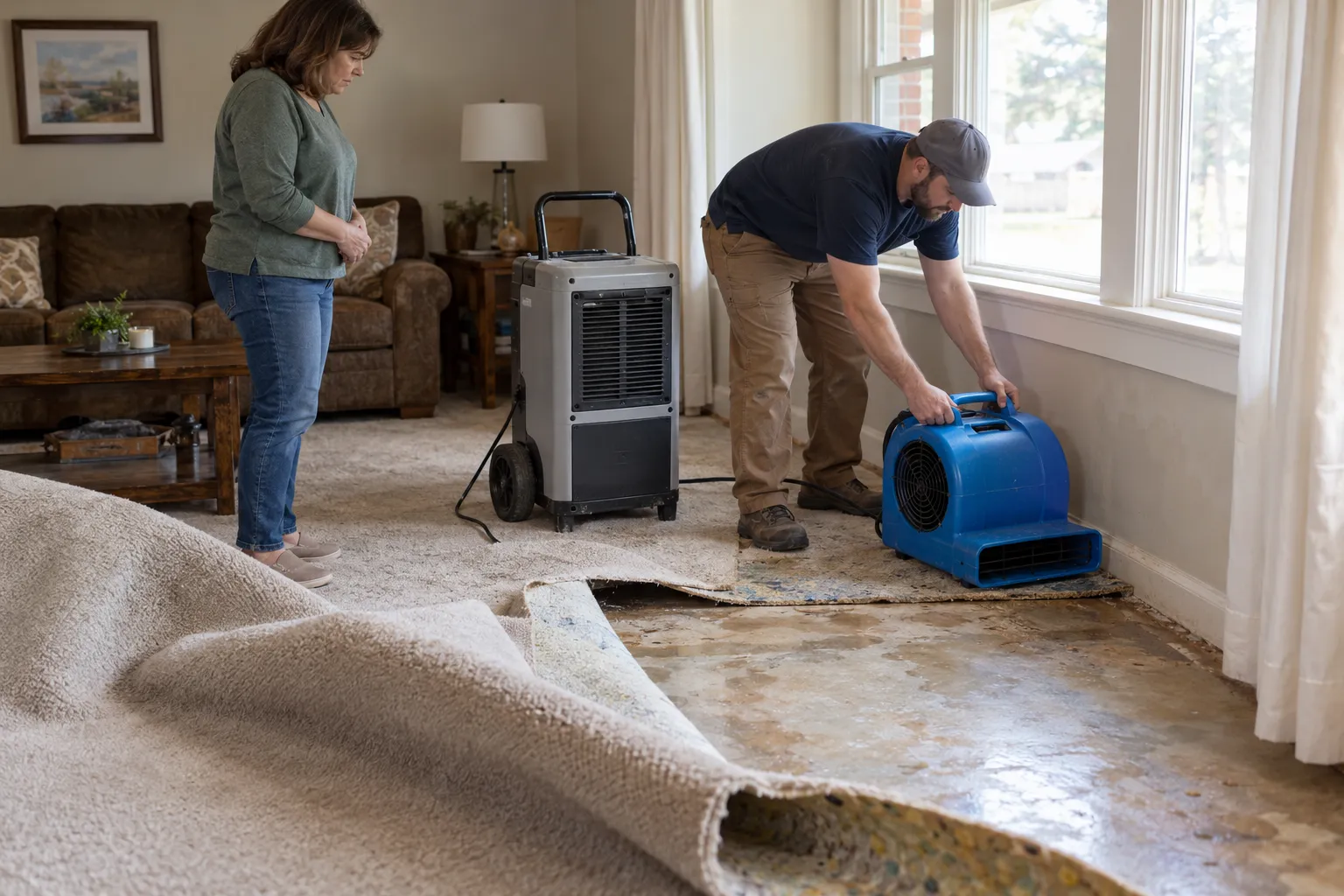
Myth: if the floor looks dry, the job is done. Fact: water hides in subfloors, wall bottoms, insulation and carpet padding. Water extraction pulls out the liquid you can see. Structural drying handles the moisture you can't. Both steps matter, and skipping the second one is how musty smells and warped boards show up weeks later.
Englandpanel Restoration is a referral service for homeowners in the Oklahoma City metro area. We do not do the work. We connect you with independent local providers, explain what drives the price, and push for a written quote every time. Providers do the work, and you decide who to hire.
Standing Water First: Get It Out
A lot of people think a little water will simply dry on its own. In practice, water you can see is the small part of the problem. It slips under baseboards, into the subfloor and up the bottom of the wall.
If water is pooled near outlets, appliances or the panel, stay out of the room. Ask a provider how to handle it safely before you step in.
Get an Estimate
Why Speed Matters More Than You Think
Wet materials start to change quickly. Drywall softens, wood swells and carpet padding holds water like a sponge. Mold can begin to grow in a few days when things stay damp.
Many providers can respond quickly, but availability varies. Request a callback to check provider availability in your part of the Oklahoma City metro area.
Myth: A Mop and a Fan Will Do It
Household fans move air. They do not pull deep moisture out of framing or concrete. A mop only handles the top layer.
Providers use pumps and extractors built for volume. They also use meters to show where moisture remains, which a box fan can never tell you.
How Water Extraction Works
Extraction is the first physical step. The provider removes the liquid water before anything else.
- Submersible pumps clear deeper water.
- Wet vacuums and truck-mounted units lift water from floors and carpet.
- Wet padding and soaked insulation may be pulled out, since they rarely dry well.
The goal is simple: less water left means less drying time later.
How Structural Drying Works
After extraction, the building itself still holds moisture. Structural drying pulls it out of walls, floors and framing.
Providers set air movers to push air across wet surfaces. Dehumidifiers then collect the moisture from the air. Sometimes small holes or removed baseboards let air reach wall cavities.
Meters, Maps and Daily Checks
A good provider does not guess. They read moisture levels with meters and note them on a simple map of the room.
They return to check readings as the drying goes on. Equipment comes out only when the materials reach a normal, dry range. Ask to see those numbers.
How Long Does Drying Take?
Many jobs run a few days, and larger or deeper losses can take longer. Thick hardwood, concrete and wall cavities dry slower than carpet.
Weather matters too. Humid spring storm weather slows drying, while cold dry winter air helps once heat is on. A provider can give a realistic window after seeing the space.
What Drives the Price
Price is not a mystery once you know the pieces. Size of the wet area, depth of the water and how many days equipment runs all count. Materials that must be removed add labor.
Myth: the first number you hear is the final number. Fact: it often shifts once moisture readings come in. That is why a written quote matters.
Get an Estimate
Get the Quote in Writing
A written quote should list equipment, number of days, removal work and any disposal charges. It should also say what happens if drying takes longer than planned.
Quote in writing, every time. If a provider won't put it on paper, keep looking.
What You Can Do While You Wait
Small steps help, and none of them replace a provider.
- Take photos and short videos of the water and damaged items.
- Lift small furniture and rugs off wet floors if it is safe.
- Move valuables and papers to a dry room.
- Open interior doors to let air move.
- Skip walking on soaked drywall or ceilings.
Talking to Your Insurer
Some policies may cover sudden damage, but coverage varies, so check your policy. Providers can often help document damage for a claim with photos, moisture readings and notes.
Keep every receipt. Don't toss damaged items until you know what your insurer needs to see.
Homes That Dry Differently
Ranch homes with basements or storm cellars often collect water low and hold it. Frame construction means water can travel inside wall cavities. After hail, high wind or heavy spring storms, roof and window leaks can wet ceilings first and the floor later.
Tell the provider where you think water entered. It helps them look in the right places.
Questions to Ask Before You Hire
- Will you measure moisture and share the readings?
- What equipment will you use, and for how many days?
- Does the quote cover removal of wet materials?
- What could change the price, and how will you tell me?
- Are you licensed and insured in my state?
The provider answers these, not Englandpanel Restoration. Independent providers set their own terms.
Who Does What
Here is the plain version. Englandpanel Restoration is a referral service. We connect you with a local provider in our network. The provider visits, quotes and does the work.
You are never required to hire anyone we connect you with. There is no obligation to move forward.
Get an Estimate
Ready to Compare Options?
Tell us about the water, the room and the rough size. Request an estimate and you can review the written quote at your own pace.
What's Included
Standing Water Removal
Pumps and extractors clear pooled water from floors, carpet and low areas so it stops soaking deeper.
Moisture Mapping
Meters find hidden dampness in walls and floors, then track progress.
Air Movers and Dehumidifiers
Equipment moves air across wet surfaces and pulls moisture out of the room.
Wet Material Removal
Soaked padding, insulation or drywall that can't dry well may be taken out and replaced.
Typical Extraction and Drying Costs
These are typical U.S. ranges and they vary by job. Water depth, square footage, equipment days and removal work all move the total. Always get a written quote before work begins.
| Item | Typical range | Notes |
|---|
| Water extraction (pumps, vacuums) | $300 – $1,500 | Depends on water depth and area |
| Moisture inspection and mapping | $100 – $400 | Often rolled into the job quote |
| Air movers (per unit, per day) | $25 – $50 | Count depends on room size |
| Dehumidifier (per unit, per day) | $60 – $150 | Larger units cost more |
| Wet drywall or insulation removal | $1 – $4 per sq ft | Varies by material and access |
| Antimicrobial treatment | $0.50 – $2 per sq ft | Used when damp materials stay wet |
Get an Estimate
How It Works
Share the Details
Tell us where the water is, how deep, and how large the area looks.
Get Matched
We connect you with a local provider in our network.
Review the Quote
The provider assesses the space and gives a written quote with equipment and days.
Extract, Then Dry
The provider removes standing water, sets drying gear and checks moisture readings.
Why Call Englandpanel Restoration
Written Quotes Every Time
We push for itemized quotes so you can compare equipment, days and removal work.
Providers Do Work
Independent local providers handle the pumping and drying. Englandpanel Restoration only connects you.
Plain Answers
We explain what drives the price before you hire, in simple words.
No Obligation
Request an estimate, read the quote and decide. You never have to hire.
Other Services